


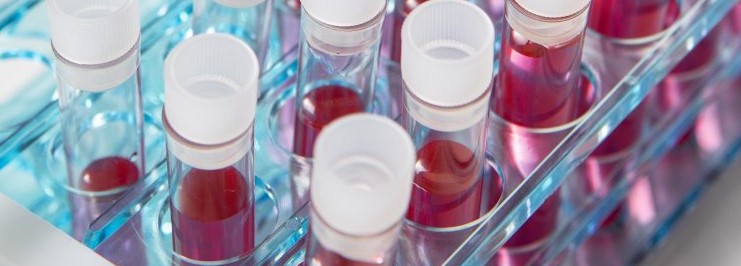
Biopharmaceuticals
Beyond-Use Date (BUD) Prediction
Explainable estimation of the beyond-use date for biopharmaceuticals — proteins, monoclonal antibodies, peptides, or viral particles — based on the API’s molecular properties, formulation characteristics (buffer, pH, cryoprotectants, surfactants), packaging (glass, polymer, closure, light exposure), and environmental parameters (temperature, agitation, oxidative stress), leveraging published stability data.
What is this module for?
This module helps scientifically justify the beyond-use date (BUD) for biopharmaceutical preparations, optimize formulations (buffer selection, additives, cryoprotectants) with respect to protein stability, and support pharmacy decision-making with an exportable report (PDF/CSV) and an explainable analysis of degradation drivers.
Inputs
Required data include the API’s physicochemical characteristics (molecular weight, structure, isoelectric point, hydrophobicity), formulation parameters (pH, buffer, sugars, surfactants, amino acids, cryoprotectants), as well as packaging and environment (container material, closure system, light, temperature, agitation).
Outputs
The module provides the predicted beyond-use date (BUD) with an confidence interval, a ranking of influential factors (aggregation, oxidation, denaturation, adsorption), and an exportable report for traceability and scientific justification.
Worked examples
Monoclonal antibody in aqueous solution with a standard formulation → direct BUD prediction.
Protein unstable without surfactant or under oxidative stress → estimation complemented by analysis of degradation causes.
Stability comparison between a glass vial and a polymer syringe (adsorption, light sensitivity).
Limits & precautions
The model’s applicability domain is restricted to protein- or virus-based formulations covered by published data. Under extreme conditions (mechanical stress, intense light, extreme pH), increased uncertainty may require additional experimental validation.